
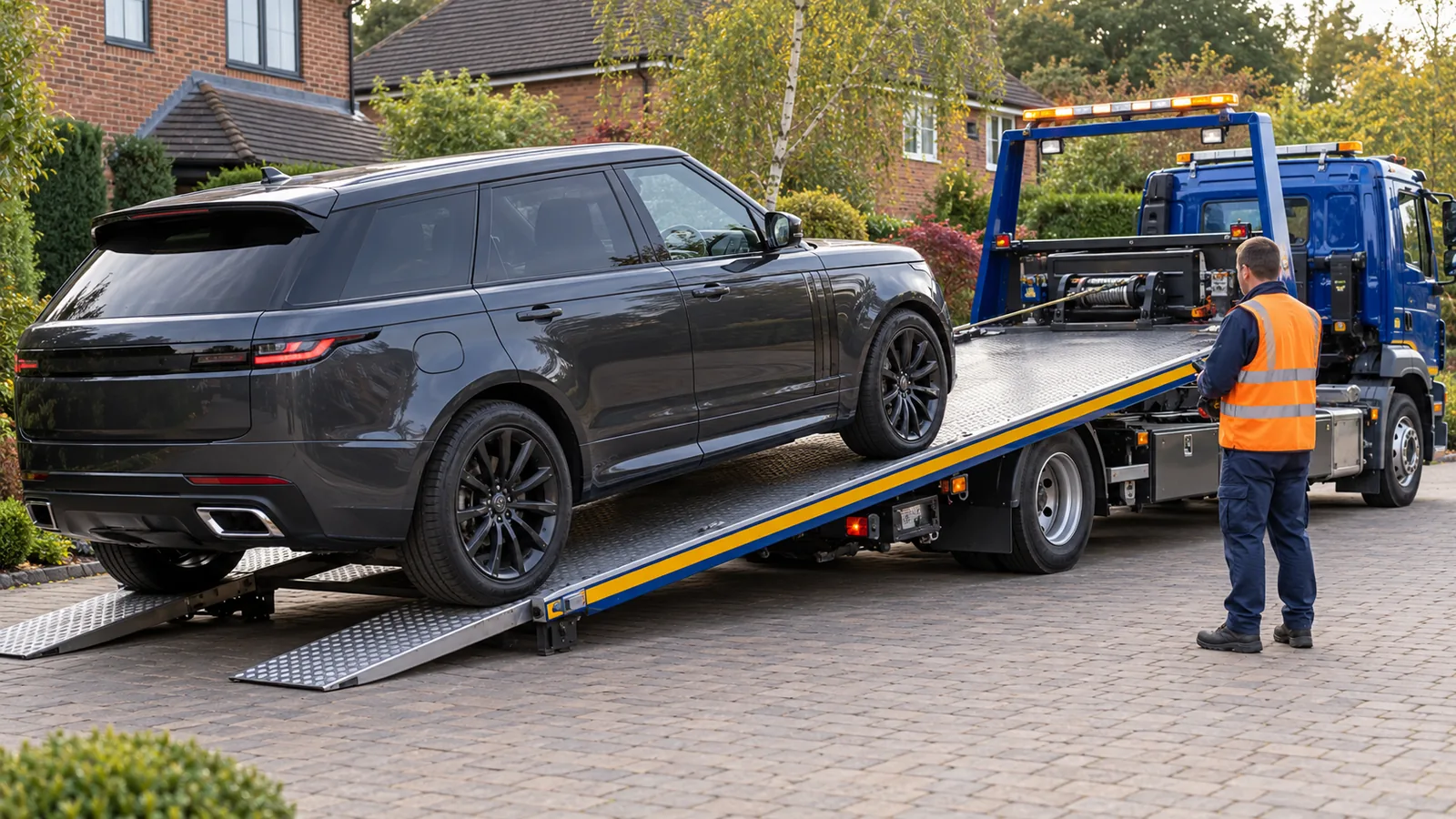
Start with the exact model
SUVs vary in weight, length and drivetrain. Tell us the make, model, transmission and whether it is electric, hybrid or conventionally powered. Include any roof equipment, modifications or additional load. A familiar model name alone does not confirm that a particular truck or trailer is suitable.
Wheel and drivetrain requirements
Report whether the vehicle runs and drives for loading, along with any damaged, missing or locked wheels. Automatic transmissions, four-wheel-drive systems and electronic parking brakes can have particular transport requirements. We assess the method around the vehicle’s condition and manufacturer guidance; do not try an unfamiliar release procedure to make it easier to collect.
Check the space at each end
A large SUV behind a low car park barrier or on a steep driveway needs access planning. Provide the entrance, available space, height restrictions and surface. At the destination, confirm opening hours and who can accept the vehicle. A full delivery address or postcode is needed for a transport quote.
Quote for the actual recovery
Choose SUV / 4x4 recovery and add the fault, warning messages or other relevant details in your notes. The team checks equipment, journey and availability, then agrees the price and collection arrangements with you. Where trailer transport may be suitable, towing limits, load and safe securing are checked before a booking is accepted.
Your questions, answered.
Can I request recovery for a Range Rover?
Yes. Send the exact model, fault, wheel condition and collection access. Capacity and the appropriate recovery method must be assessed before acceptance.
Can a locked-wheel SUV be recovered?
Describe which wheels are locked and any damage or electronic parking-brake issue. Suitable equipment and safe access must be confirmed for the job.